Services
GI Endoscopy
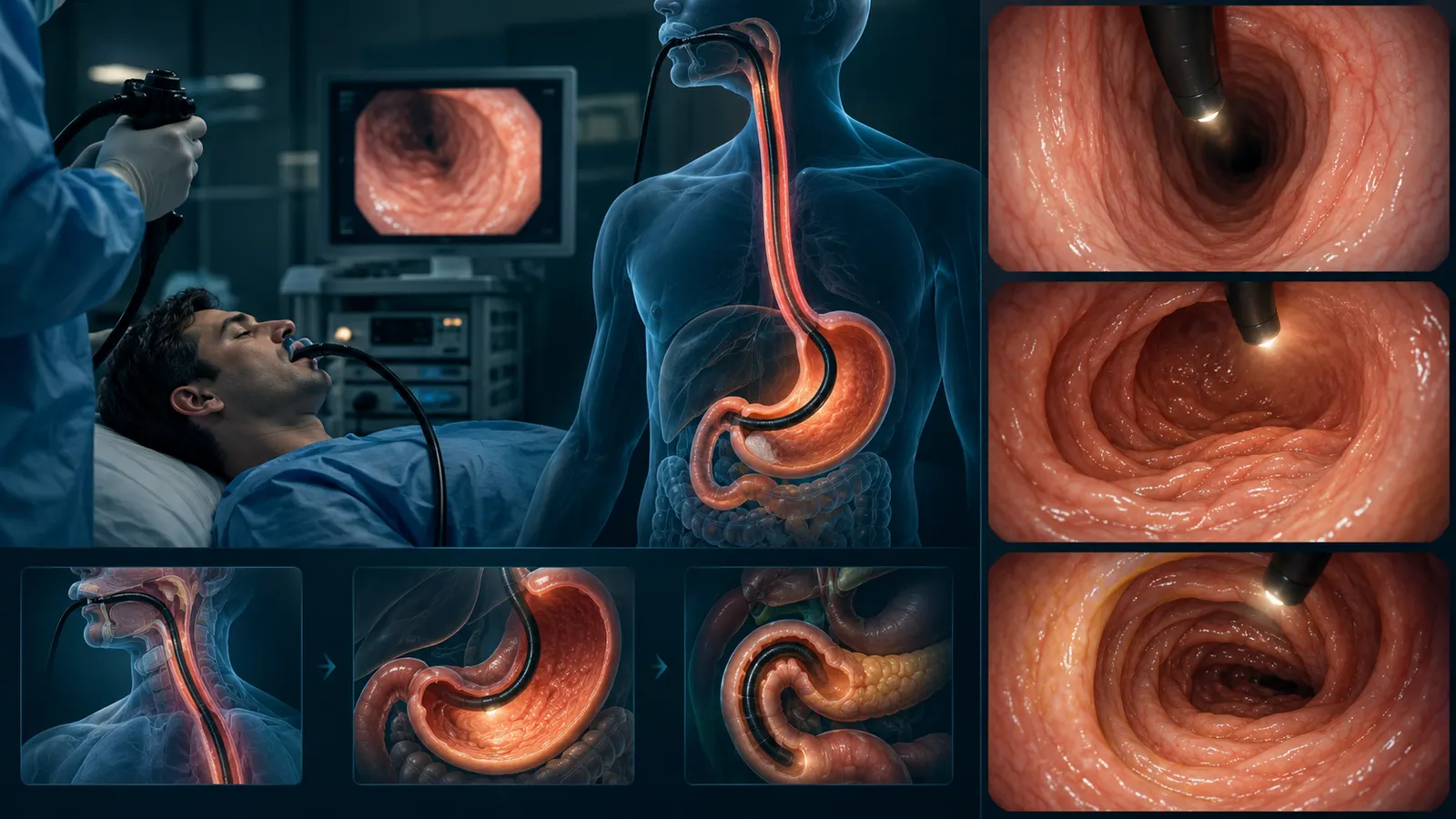
A thin, flexible tube with a camera examines the food pipe, stomach and first part of the small intestine (upper GI endoscopy) or the large bowel (colonoscopy).
About this condition
Problems inside the abdomen cannot always be understood from the outside. In gastrointestinal endoscopy, a camera on a thin, flexible tube allows the food pipe, stomach, duodenum and large bowel to be examined. Thickened areas, ulcers, polyps or inflammation can be seen directly, and tissue samples can be taken if needed.
Treatment
Before the test you must fast for 6 to 8 hours, and if you have diabetes your doctor should be told beforehand. Using medication, the camera is passed slowly through the tube. Most people go home immediately afterwards, although the sedation or anaesthesia may make you feel sleepy for a while.
Common symptoms
- Repeated pain in the upper abdomen or mid-abdomen
- Burning behind the breastbone or acidity
- Difficulty swallowing and bloating after meals
- Weight loss or bleeding
When to see a doctor
- If you pass black stool or blood in the stool, do not delay — have an endoscopy
- Come to the chamber for repeated nausea, rapid weight loss or difficulty swallowing
- Over the age of 50, bleeding makes a colonoscopy essential
Even without symptoms, a regular colonoscopy after the age of 50 helps detect colon cancer at an early stage.
Related services
Would you like to see a doctor?
Send a request online and the chamber will call to confirm the time. You can also call the chamber directly for a serial.